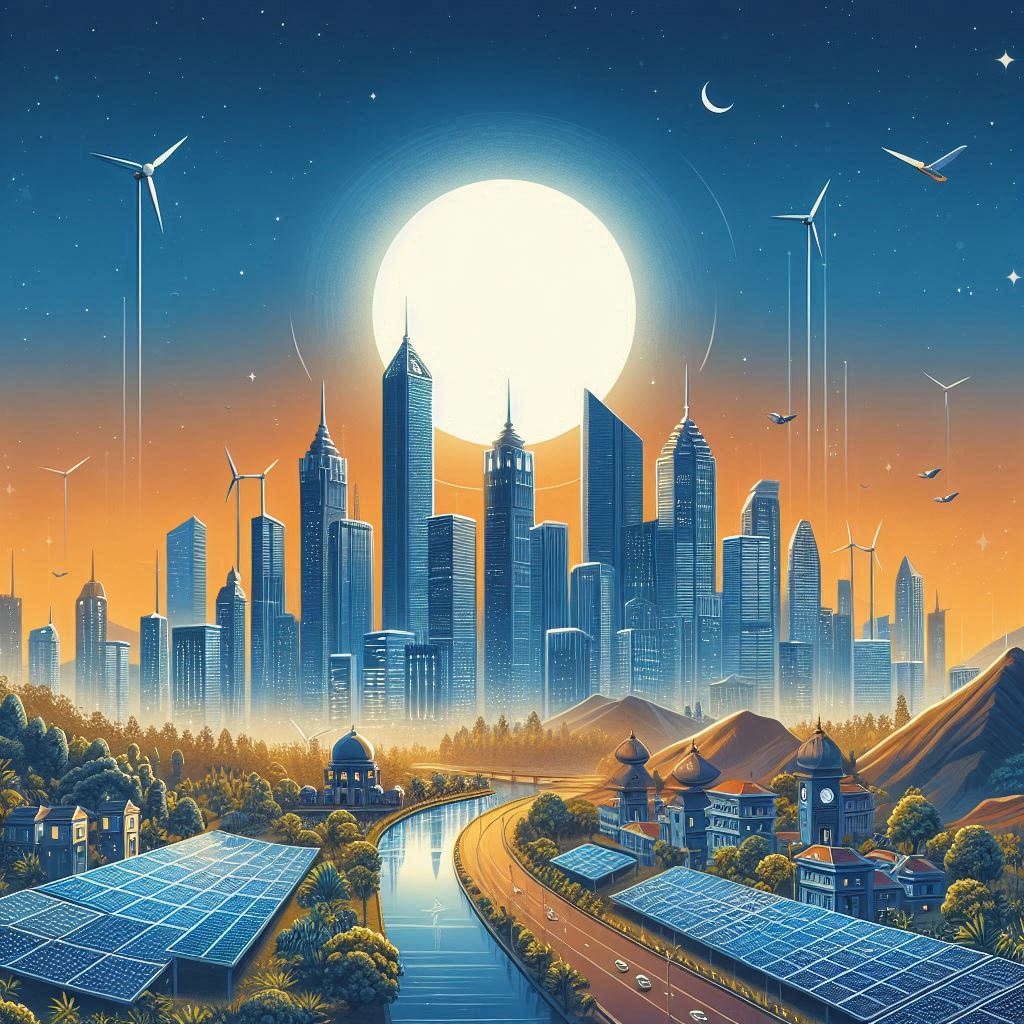
As the world battles climate change and seeks cleaner energy solutions, solar technology is emerging as a cornerstone of the renewable revolution. In India, two innovative and promising developments are taking center stage—Solar Park projects and the futuristic solar tree installations. These innovations not only reflect the nation’s commitment to sustainability but also symbolize the transformative potential of solar energy.
What is a Solar Park?
A solar rooftop system is a large-scale solar photovoltaic power generation project developed by central or state governments in collaboration with private developers. These parks are equipped with the necessary infrastructure—like land, transmission lines, and road access—to support multiple solar power plants in one location.
India’s Ministry of New and Renewable Energy (MNRE) has been actively promoting solar parks under its Solar Park Scheme. These parks typically range in capacity from 500 MW to several gigawatts, supplying clean electricity to thousands of households and industries. Notable solar parks in India include:
- Pavagada Solar Park, Karnataka – One of the world’s largest, with a capacity of 2,050 MW.
- Bhadla Solar Park, Rajasthan – Known for its arid climate, it hosts over 2,200 MW of solar capacity.
- Rewa Solar Park, Madhya Pradesh – Pioneering in terms of tariff competitiveness and scale.
Solar parks ensure better resource utilization, centralized maintenance, and efficient energy management—all crucial for India’s ambitious renewable energy goals.
The Concept of a Solar Tree
A solar tree is a vertical, tree-like structure fitted with solar panels that generate electricity by harnessing sunlight. Unlike traditional flat-panel installations, a solar tree uses minimal land and can be installed in urban areas, parks, schools, highways, or office complexes.
The structure is designed to mimic a real tree, where each “branch” holds a solar panel. This innovative design not only saves space but also adds aesthetic value. Some models are equipped with features like battery storage, charging ports for electric vehicles, and real-time data displays showing energy generation and savings.
In India, organizations like the Central Mechanical Engineering Research Institute (CMERI) have developed solar trees that can generate between 3 kW to 11.5 kW per day, depending on the model. These trees can power streetlights, homes, or even small community centers.
Benefits of Solar Parks and Solar Trees
Both solar parks and solar trees offer a variety of environmental, economic, and social advantages:
- Efficient Use of Land
Solar parks are built on barren, non-agricultural land, making them ideal for large-scale renewable energy generation. Solar trees, on the other hand, are perfect for urban environments where space is limited. - Scalability
Solar parks support massive energy production, often supplying power to entire regions or industrial hubs. Solar trees are modular and scalable, ideal for small-scale power needs or smart city projects. - Green Job Creation
From installation to maintenance, these projects generate employment opportunities in rural and urban areas. - Carbon Footprint Reduction
By replacing fossil fuels, solar installations significantly cut down on greenhouse gas emissions. - Aesthetic and Educational Value
Solar trees not only look appealing but also serve as educational tools, helping spread awareness about renewable energy in schools, campuses, and public places.
Challenges and Innovations
While solar parks require large capital investment and coordination among multiple agencies, the returns in terms of energy output and sustainability are massive. On the other hand, solar trees are relatively new, and their adoption is slower due to awareness and initial costs.
However, the increasing affordability of solar panels, combined with government subsidies and technological advancements, is making both solutions more accessible. Innovations such as dual-axis tracking in solar trees and integrated grid systems in solar parks are improving efficiency and viability.
The Road Ahead
India has set an ambitious target of achieving 500 GW of non-fossil fuel capacity by 2030, and solar parks are expected to contribute significantly. At the same time, solar trees can play a pivotal role in urban renewable integration—lighting streets, powering EVs, and bringing green energy to even the most crowded cities.
Together, solar parks and solar trees represent a vision of decentralized, smart, and sustainable energy. They showcase how modern engineering and environmental responsibility can coexist beautifully.
Conclusion
In a world striving for sustainability, innovations like the solar power system and solar tree are lighting the path forward. They combine scale with innovation, aesthetics with utility, and vision with action. As technology continues to evolve, these solar solutions will be at the heart of India’s energy future—powering lives while protecting the planet.
 digitaldata
Leave a comment